Juicing has become a popular way to add fruits and vegetables to daily routines. For people who enjoy fresh juice, the benefits of juicing can include convenient nutrient intake, extra fluids, and greater variety in the diet. However, juice works best as part of a balanced eating pattern rather than as a replacement for whole fruits, vegetables, or complete meals.
Fresh fruit and vegetable juices can provide vitamins, minerals, plant compounds, and water. Combining different types of produce can also create a wider range of flavors and nutrients. At the same time, juicing removes much of the fiber found in whole produce, so juice and whole fruits and vegetables can serve different roles in a healthy diet.
What Are the Benefits of Juicing?
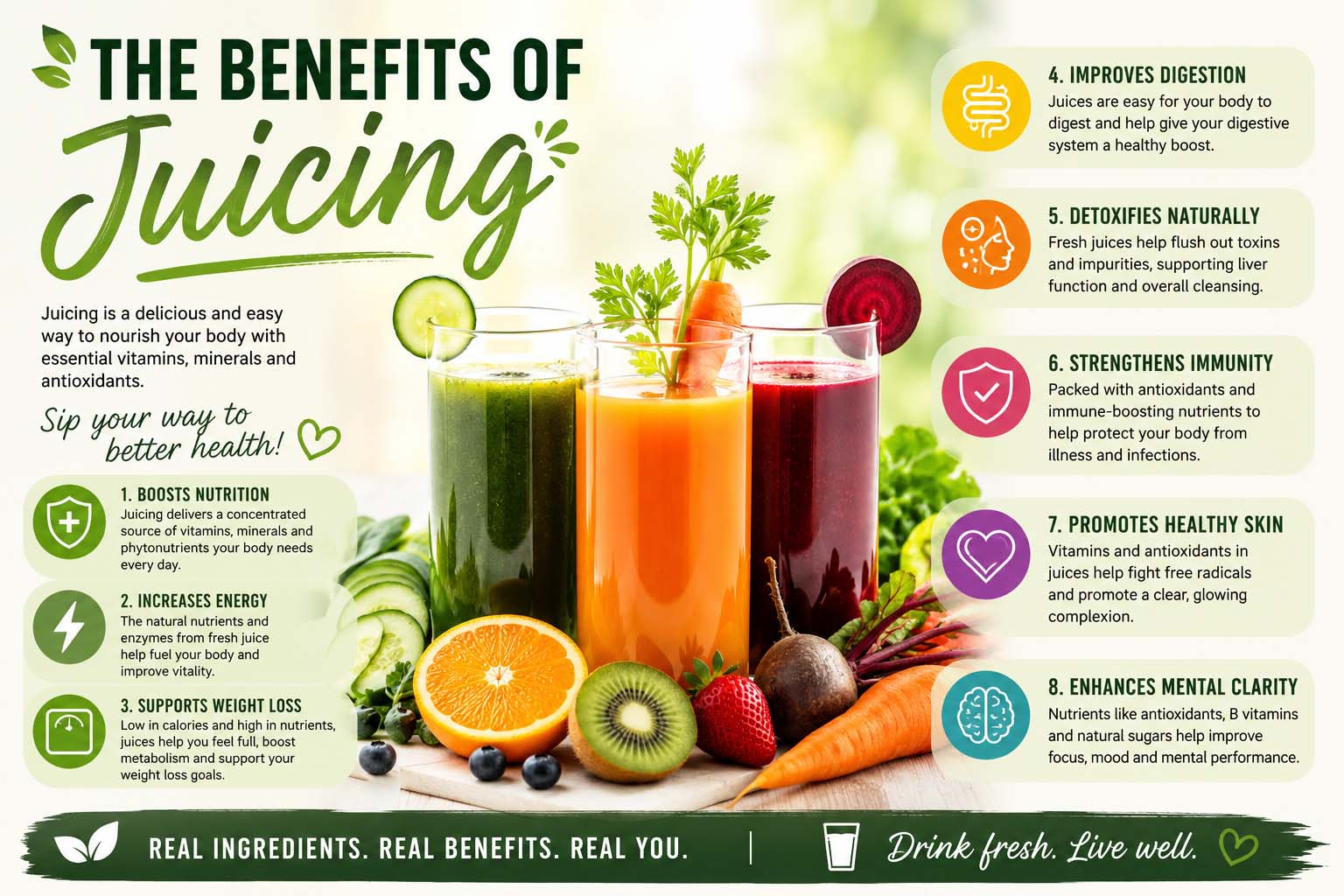
The benefits of juicing largely depend on the ingredients you use and how juice fits into the rest of your diet. Fresh juice can make it easier to consume a variety of fruits and vegetables while also providing fluids and nutrients.
For example, juices made with leafy greens, carrots, citrus fruits, berries, cucumber, or other produce can offer different vitamins, minerals, and plant compounds. However, juice does not provide the same amount of fiber as whole produce because juicing removes much of that fiber.
Juice can therefore complement meals or snacks, while whole fruits and vegetables remain important sources of fiber and other nutrients.
Health Benefits of Juicing and Nutritional Value
One of the main advantages of fresh juice is convenience. A single drink can combine several fruits or vegetables, which may help people add more variety to their eating pattern.
Vegetable-based juices can also provide nutrients from their ingredients. According to USDA MyPlate guidance, 100% vegetable juice can count toward the Vegetable Group, although whole vegetables provide dietary fiber that juice may lack. USDA MyPlate Vegetable Group
For that reason, a balanced approach usually works better than relying heavily on juice. Whole produce, protein foods, grains, healthy fats, and other nutrient-dense foods can all contribute to an overall healthy eating pattern.
10 Practical Benefits of Fresh Juice
- Convenient nutrient intake: Fresh juice can combine several fruits or vegetables in one drink.
- Extra fluids: Because juice contains a substantial amount of water, it can contribute to daily fluid intake.
- Greater dietary variety: Juicing makes it easy to experiment with different combinations of produce.
- An alternative to sugary drinks: Unsweetened juice can provide an option instead of some beverages with added sugar.
- More vegetable combinations: Vegetables such as cucumber, celery, carrots, spinach, and beetroot can work well in different combinations.
- Useful around exercise: Some juices can provide carbohydrates and fluids, depending on the ingredients and portion.
- Plant compounds: Fruits and vegetables contain naturally occurring compounds that contribute to their nutritional value.
- Flexible preparation: You can prepare juice at home and adjust it to your taste preferences.
- Greater interest in produce: Trying new juice combinations may encourage people to explore more fruits and vegetables.
- A simple addition to meals: A moderate serving of juice can complement a balanced meal or snack.
Even so, drinking more juice is not automatically better. Large portions can add substantial natural sugar and calories while providing less fiber than whole produce.
Benefits of Juicing Celery
Celery is a popular ingredient in homemade juices because of its mild flavor and high water content. Celery juice can contribute fluids and nutrients from celery, but claims that it provides unique or dramatic health effects deserve careful consideration.
Whole celery also provides dietary fiber, while juicing removes much of that fiber. Therefore, celery juice can fit into a varied diet without replacing whole vegetables.
Juicing Benefits for Digestive Health
Juice contributes fluids and can provide nutrients from fruits and vegetables. However, fiber plays an important role in a healthy digestive routine, and most juicing methods remove a significant portion of the fiber found in whole produce.
For people looking to increase dietary fiber, include whole foods such as fruits, vegetables, beans, legumes, and foods high in fiber alongside juice.
A broader eating pattern that includes fiber-rich foods, adequate fluids, and a variety of nutrient-dense choices can support digestive health more effectively than relying on juice alone.
Energy, Nutrition, and the Everyday Diet
Juice can provide carbohydrates and fluids, which may help when someone wants a quick source of energy. However, juice does not guarantee relief from fatigue or low energy.
For more lasting nourishment, balanced meals can include protein, healthy fats, fiber-rich carbohydrates, fruits, and vegetables. Sleep, physical activity, hydration, and overall food intake also influence everyday energy levels.
Best Fruits and Vegetables for Juicing
Popular fruits and vegetables for juicing include apples, oranges, pineapple, carrots, cucumber, celery, spinach, beetroot, and leafy greens. The best combination depends on taste, availability, and individual dietary needs.
Fruit-heavy juices can contain more natural sugar, so balancing fruit with vegetables can provide a practical option. People who enjoy pineapple juice can also explore the benefits of pineapple juice, while cucumber can work well in juices and other refreshing drinks such as those described in the benefits of cucumber water.
Juicing Benefits for Fitness and Recovery
Juice can provide carbohydrates and fluids, making it a possible addition to a meal or snack around physical activity. However, the ideal choice depends on the type, duration, and intensity of exercise.
After exercise, a balanced meal or snack that includes protein and carbohydrates may better support overall recovery than juice alone. Beetroot juice is another popular option among active people, and the best time to drink beetroot juice can depend on individual goals and routines.
Healthy Juicing Tips
- Wash fruits and vegetables thoroughly before juicing.
- Follow the manufacturer’s cleaning and maintenance instructions for your juicer.
- Keep portions moderate, especially when using several high-sugar fruits.
- Include whole fruits and vegetables in your diet to maintain fiber intake.
- Drink juice as part of a balanced eating pattern rather than using it as a meal replacement by default.
- Store fresh juice safely and follow appropriate food-handling practices.
- If you have a medical condition or specific dietary requirements, seek advice from a qualified healthcare professional.
Juicing as Part of a Balanced Wellness Routine
Juicing can fit into a healthy lifestyle when it complements rather than replaces a varied diet. Whole fruits and vegetables, protein sources, whole grains, healthy fats, regular physical activity, sleep, and adequate hydration all contribute to overall wellness.
For people who enjoy different healthy beverages, the benefits of drinking warm water can also form part of a broader hydration routine.
Beginner-Friendly Juicing Routine
Beginners do not need complicated recipes or extreme juice cleanses. Start with familiar ingredients and simple combinations, such as cucumber with apple, carrot with orange, or celery with other vegetables.
Use moderate portions and consider how the drink fits into the rest of the day’s meals. No universally required time exists for drinking juice. Choose a time that fits comfortably into your routine.
Frequently Asked Questions About Juicing Benefits
What Are the Benefits of Juicing?
The benefits of juicing can include convenient nutrient intake, added fluids, and more variety in the diet. However, juice generally contains less fiber than the whole fruits and vegetables used to make it.
Is Juicing Healthy Every Day?
Juice can form part of a healthy daily diet for some people, especially when portions remain reasonable and the rest of the diet includes whole fruits, vegetables, protein, whole grains, and healthy fats. Drinking large amounts of juice every day is not necessary for good health.
What Is the Best Juice for Beginners?
A simple juice made with familiar fruits and vegetables provides a good starting point. Carrot, cucumber, apple, citrus, celery, and leafy greens can work well together according to personal taste.
Does Celery Juice Really Help?
Celery juice can provide fluids and nutrients from celery, but strong claims about special health effects deserve caution. Whole celery also provides fiber that juicing largely removes.
Can Juicing Replace Meals?
Juice alone usually does not provide a complete meal because it may contain limited protein, fat, and fiber. If you use juice around meals, combine it with other nutrient-dense foods when appropriate.
Featured Image Idea
Use a bright, natural photograph showing a glass of fresh vegetable or fruit juice alongside colorful whole produce such as carrots, cucumber, leafy greens, citrus, and apples. The image should reinforce the idea that fresh juice forms one part of a varied, balanced diet.
Conclusion
The benefits of juicing can include convenient nutrient intake, added fluids, and greater variety in fruit and vegetable choices. Fresh juice can provide an enjoyable addition to a balanced eating pattern, especially when you keep portions sensible and vary the ingredients.
However, juicing does not replace the nutritional role of whole fruits and vegetables. Because juicing removes much of the fiber, the best approach combines juice with a varied diet that includes whole produce and other nutrient-dense foods.